Saturday, February 25, 2012

EXTRA CREDIT: BOARDWALK EMPIRE

The HBO show, Boardwalk Empire has won critical acclaim not only for its noted director (Martin Scorsese), but for its screenwriting, acting, and relative historical accuracy. The series was nominated for 18 Emmy Awards in 2011, winning eight, including "Outstanding Directing", "Outstanding Cinematography", "Outstanding Art Directing", and "Outstanding Casting".

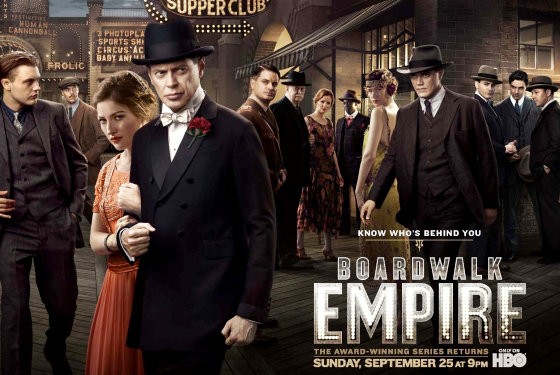
Boardwalk Empire HBO 


Based on the book, Boardwalk Empire: The Birth, High Times, and Corruption of Atlantic City, by Nelson Johnson, the show takes us back to Atlantic City in the 1920s, specifically to the time of US Prohibition between 1919 and 1933. Character Nucky Thompson, played by Steve Buscemi, is the main character of the series. He is based on Enoch L. Johnson, who ran Atlantic City's Republican party (and many of the city's illegal organizations) from the 1910s until 1941. 

Atlantic City during that time was a favorite vacation spot for upper class and middle class people from New York City, the surrounding New Jersey area and Philadelphia. The popularity of the automobile during the 1920s enabled people to engage in tourism across the United States, and Atlantic City's beaches and boardwalk made for a perfect holiday getaway. 

Nucky Thompson, in season two of Boardwalk Empire, has relinquished his role as sheriff of Atlantic City to his younger brother. He is now the Atlantic County Treasurer, handling a great deal of money for the county. He is more and more aware of the burgeoning public pressure (perpetrated by the FBI and IRS now, instead of the easily bribed Atlantic City police) on himself and his operations. This pressure is exerted in the form of an election fraud charge. In the series, Nucky calls on his buddy the Attorney General to help him get out of it. In order for the charge to disappear, Nucky must be convicted on national charges for the Attorney General to have leeway over the verdict. Thus Nucky manipulates the local government to find his prostitution rings (by paying prostitutes to go over to the police department and loudly claim that they are, indeed, prostitutes) which elevates his case to the national level. This political maneuvering was not uncommon for 1920s Atlantic City. Real-life Johnson himself made $500,000 annually in kickbacks from his various organizations, an enormous sum even today. 

Boardwalk Empire Main Cast
HBO 

Real-life Enoch Johnson did act as sheriff in Atlantic City (and his brother eventually took the role after him) but his primary position was more as the face of organized crime. He did not have an official position within the Republican Party. The IRS and FBI did launch an investigation into Johnson's practices, but not until 1936. So the timing was off for the series in order to heighten drama. 

Nucky Thompson/Johnson, both in the show and in real-life, have an attitude towards the vices of Atlanic City that is quite unique. In the show, Nucky does engage in some risque behavior with Ziegfeld Follies girl Lucy Danziger, but he does not disrespect women. He helps flappers, prostitutes and any woman within his territory with babies born out of wedlock. He provides money to the Women's Temperance League among other causes, and even speaks at one of their events in the show. He is a generous man to the community around him. 


Nucky Thompson 


Nucky Thompson/Johnson, lives by his own maxim: "When I lived well, everybody lived well" (The New York Times). Also, Nucky is not a drunk despite his huge influence as a bootlegger. This parallels Johnson, who was reportedly a teetotaler until his first wife's death of tuberculosis. Even afterwards, he was not recalled as a heavy drinker. This slight aversion to alcohol does not mean that the man tries to prevent others from drinking or other vices in Atlantic City. As Johnson said to The New York Times in 1968, "We have whiskey, wine, women, song and slot machines. I won’t deny it and I won’t apologize for it. If the majority of the people didn’t want them they wouldn’t be profitable and they wouldn’t exist. The fact that they do exist proves to me that the people want them". This attitude led to Atlantic City being called "America's Playground" or "The World's Playground" both in real-life and the show. 


1920s Atlantic City Boardwalk 


One of the most historically accurate Johnson/Thompson qualities is the wearing of a carnation in one buttonhole. Johnson wore a different carnation in his suit buttonhole daily, and Steve Buscemi loyally recreates this image despite their other different physical characteristics: 

Enoch Johnson (LEFT) and Nucky Thompson (RIGHT)

Atlantic City, at the time, was an excellent place for Americans to have fun. Miles of beaches with nice homes, for rent or for sale, provided an excellent summer getaway. The Boardwalk was full of ice cream shops, saltwater taffy stores, and even carnival rides. "The Bathers Revue" was a favorited staple of the Atlantic City summer, with rows of bathing babes (1000 total) strutting down the Boardwalk to be seen by over 500,000 spectators annually (New York Daily News). In addition to beautiful women and beauty competitions (including the precursor to the Miss America contest) for entertainment, there were saloons, carnivals, casinos, gambling on horse/dog/car races, fancy hotels and beach resorts, and whorehouses.

In 1924, a crowd of an estimated 300,000 watches the sort of beauty parade that eventually gave birth to the Miss America pageant.
1924 Beauty Parade with 300,000 Spectators
Precursor to the Miss America Pageant


File:Marlborough-Blenheim Hotel (demolished) Atlantic City, NJ.jpg
The Marlborough-Blenheim Hotel of Atlantic City
A Seaside Spa and Hotel Resort
1910 

But it wasn't all pageants and beauty queens. Atlantic City was also home to the Atlantic City Speedway where the likes of Harry Hartz zipped across the finish line in 1926 to win the inaugural race.
Atlantic City Speedway 
1926

According to the Atlantic City Free Public Library, "prohibition was largely unenforced in Atlantic City, and, because alcohol that had been smuggled into the city with the acquiescence of local officials could be readily obtained at restaurants and other establishments, the resort's popularity grew further". Because Atlantic City has ocean access, it could easily obtain liquor from various ships passing through. In the second season of Boardwalk Empire, ships carrying booze unload at the dockyards with bottles of liquor in crates labelled "Canadian Syrup" and "Irish Oats". Ireland and Canada are important avenues for alcohol in the series. Additionally, with the availability of automobiles, bootleggers were able to commute to and from city centers with their liquor. This enabled them to avoid interaction with officials on trains, and promoted the business. 

Relationships with the United States Navy were vital for the bootleggers' ventures to continue. In the series, the Commodore is a man with naval ties who formerly ran Atlantic City's illegal rackets. Nucky was his protege in some ways, but there is no love lost between the two men. The Commodore wants control of Atlantic City back, claiming that he "built this town" and that he will ominously "take care of Nucky". In real-life, Johnson did have a friendly relationship with a Commodore, but he was the chairman of an Atlantic City yacht club. This man, Louis Kuehnle, was known as a power broker for the Republican Party, and had this position usurped by Johnson when he eventually went to jail for illegal dealings in 1913. The inheritance of positions is clear, both in the show and in reality. 

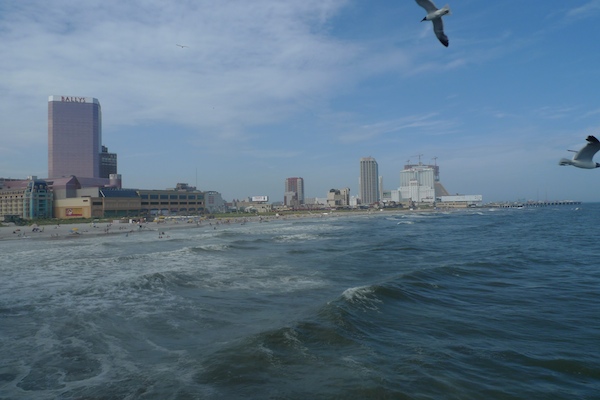
Atlantic City Port and Beach


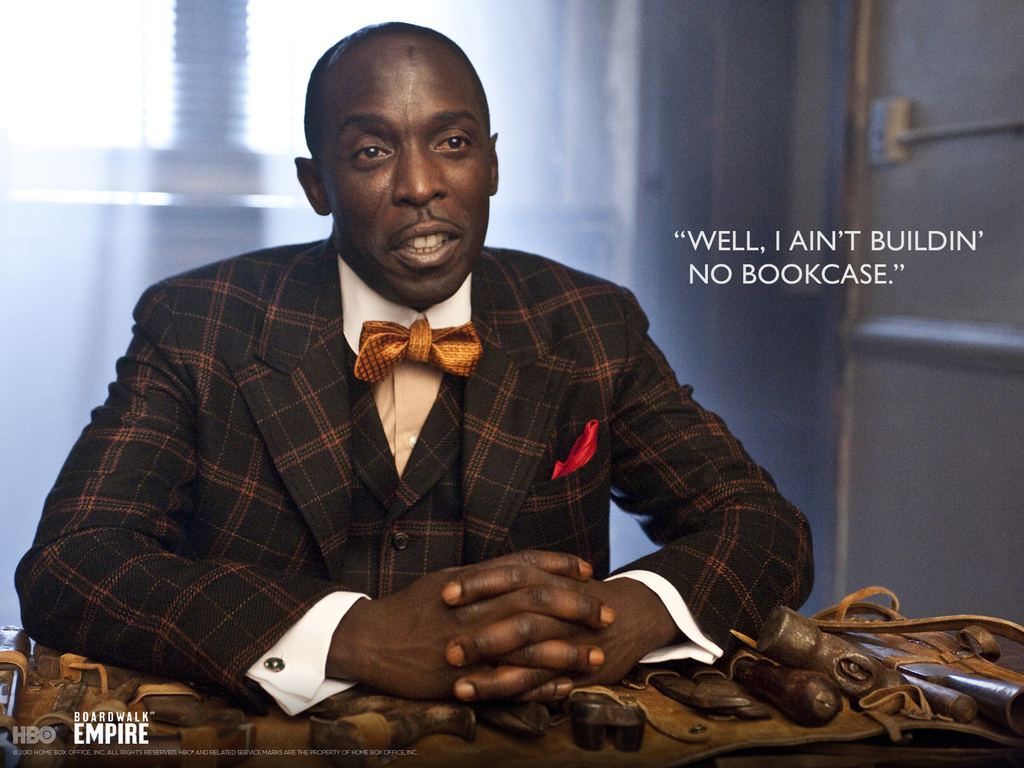
Racial tensions during the time are highlighted in the series by African-American bootlegger Chalky White. In the second season, Chalky's men are ambushed at their liquor warehouse by Ku Klux Klansmen. Chalky's adamant statement during the episode that the city couldn't be run without the 10,000 black men was largely true. Of its approximately 55,000 residents in the 1920s, 22% of them were black. They were involved in many of the communities on Atlantic City's "Northside", with schools and their own business league (Atlantic City Free Public Library). Furthermore, according to Ku Klux Klan history, in 1923 "in Atlantic City, the extremely active local Klansmen accused the city government of protecting vice and lawlessness". If there were African American bootleggers, they probably were the target of KKK in the area, vocally and otherwise. So the story shown in the HBO series could've definitely happened. 

Chalky White (Michael Kenneth Williams) 


The liberation of women is an important theme in Boardwalk Empire, as one of the character's wives, Angela Darmody, is shown to have lesbian tendencies and engages in sexually risque activities in many liberal houses in Atlantic City. Lesbianism was not something totally new in 1920s America. In 1922 Gertrude Stein published Miss Furr and Miss Skeene in magazine Vanity Fair, about an American lesbian couple emigrating to Paris to live out their lifestyle. Angela also has dreams of moving to Paris with one of her lesbian lovers, and almost does so but is caught by her husband Jimmy before departing. Paris was a city for all types of love at the time, and had a huge ex-patriot population of Americans from the first World War. The traditional domestic vocations of women were apparent during the 1920s, but there were some nuances. Personal appliances for pleasure, such as record players and radios, were reason for celebration for many women stuck at home all day. This was clear in the Boardwalk Empire episode when Lucy, the ex-Ziegfeld Follies girl, receives a gift phonograph. Her happiness at receiving such a present was enough to prevent her from committing suicide. 


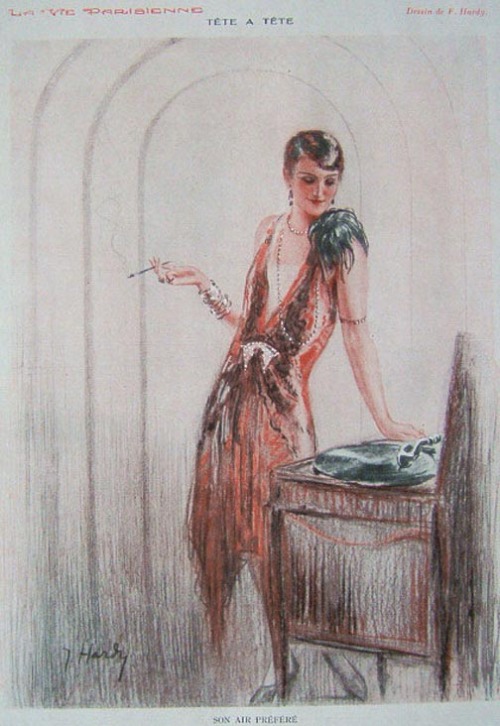
Flapper Listening to Gramophone


The liberalization of women during the Jazz Age with voting rights and a more consumer based culture, encouraging women to make opinions about what appliances to include in their homes, also included sexual experimentation. New York City, Berlin and Paris were all hotbeds for lesbian activity during the time. 

Lesbians in 1920 at one of New York City's first gay bars. 

The argument has been made that without the underground mafia culture, lesbianism would've died out with Prohibition due to the negative atmosphere and reaction of the 1920s and 1930s in mainstream society. Instead, the underground world kept lesbianism going. 


The mainstream society in Boardwalk Empire also feels the reverberations from WW1 veterans returning from service. The most obvious example is Richard Harrow, an assassin loyal to Nucky's protege Jimmy Darmody, who is a fellow veteran. Harrow is a member of the infant biomedical movement, with a painted tin cover for half of his face which was badly damaged in the war. World Wars I and II would usher in the age of biomedical technology, with contact lenses, prosthetic limbs, surgery techniques and understanding of composite materials originating on the battlefields. Harrow's assassin skills in the war are now used for mob movements. PTSD, depression and suicidal tendencies are common in Harrow, who suffers because of his physical difference and personal mental torture that he is not wanted or capable of being loved by society. 

Richard Harrow (Jack Huston) 


Richard Harrow is a beautiful character in this series, because he is so complex. Embodying the theme of a soldier that cannot move on from the battlefield, he is a powerful component of any mob because of his sheer skill. Harrow is an outsider, but welcomed by Darmody, who sees the fellow veteran in him. This history of a soldier coming home from war was not to be a new theme for the American public. 

The episodes of Boardwalk Empire, each an hour long, are a fascinating history into the Jazz Age of Atlantic City. While historic discrepancies appear, there are many factual consistencies and the drama makes for an intriguing and gripping watch. Boardwalk Empire, by focusing on Atlantic City and the surrounding area, also has a refreshing landscape instead of the usual Los Angeles or New York City skyline we see in television today. With brilliant acting, spot-on costumes, and fresh dialogue, this is one show that shouldn't be ignored. 

References

Boardwalk Empire. HBO. 2010-2012. 

Evans, Hiram Wesley. "Various Activities of the Ku Klux Klan". 
<http://www.kkklan.com/various.htm>. 


"Enoch L. Johnson, Ex-Boss in Jersey – Prohibition-Era Ruler of Atlantic City, 85, Dies". The New York Times. December 10, 1968. p. 47. 

"Nucky's Empire: The Prohibition Years". The Atlantic City Free Public Library. <http://www.atlanticcityexperience.org>. 

"The Real Boardwalk Empire: Atlantic City during Prohibition in the 1920s". New York Daily News. September 24, 2010. <http://www.nydailynews.com/entertainment/real-boardwalk-empire-atlantic-city-prohibition-1920s-gallery-1.90270?pmSlide=17>. 

"Underground: Pre-Stonewall Gay and Lesbian New York". June 22, 2009. <http://theboweryboys.blogspot.com/2009/06/underground-pre-stonewall-gay-and.html>. 


Tuesday, February 14, 2012

BLOG TWO


POST ONE:  The Progressive Era 


The American Experience segment on the Triangle shirtwaist factory fire in New York City was very intriguing and vivid. I sometimes had to take a break from watching it because it was so intensely sad and moving, simultaneously. This hour-long documentary explored the consequences of the 1911 Triangle Shirtwaist Factory Fire in central New York City. Photographs from that time were shown, along with handed-down written and oral histories from survivors and their families. The Triangle Shirtwaist Factory employed about 500 women, most of whom were immigrants (Stacy). The working female immigrant was a common theme in New York City during this era, and so the plight of the trapped women during the factory fire was quite personal. 400,000 New Yorkers appeared at the workers' mass funeral, almost ten percent of the city at the time because the connection was so heartfelt (American Experience). The fact that these women were basically trapped in a burning factory, with no fire exits, shoddily built fire escape staircases and no decent fire company to save them, spurred workers rights across the nation. By 1914, 36 states passed laws regulating fire safety and general worker safety conditions (American Experience).

I believe the widespread public opinion about factory conditions that really resulted from the Triangle fire awareness wouldn't have been possible without the demographics of New York City at the time, or the social changes being instigated by the feminine elite. 10% of New York City is reported to have shown up for the victims' symbolic funeral, and public conscience was very much involved with the case. New Yorkers gave money and covered funeral costs for the victims and their families.

Polish female immigrants, 1890s New York City
Copyright, Jewish Virtual Library

500,000 women were reported to spill out onto the East Side of New York City streets in the mornings for work in 1911 (American Experience). These young women were mostly immigrants, and so the identification of a young female dead from unsafe work conditions really must have resonated with the majority of the female working class. According to a study by Fordham University student Priam Saywack, "in 1910, New York’s population was 4,766,883 people" and "the foreign born population in 1910 was 2 million". In other words, "aliens made up 40% of New York City's total population" during that time. So naturally a devastating tragedy that occurred to immigrants would have the attention of other immigrants--a population that was half of the second largest city in the United States at the time. In addition to their staggering numbers, there was an attitude against the Eastern European Jewish, Italian, German and Irish immigrants by the native New Yorkers: "New Yorkers felt that the immigrants, particularly the Jewish and Italian newcomers, did not mesh with the cloth." This xenophobic attitude against the immigrants probably helped them unite to ask for better working conditions. 

This common enemy of the native New Yorker probably spurred a friendship between the immigrants amongst each other. Indeed, there was such a camaraderie among female workers that a strike of untold proportions left the shirtwaist and clothing factories with little choice but to adopt more lenient working conditions. The fact that a working class, made up of women, could cause such economic change really speaks to the magnitude of women that stood up for their rights. This movement would not have been possible without so many young women. These young women frequently were confused by the hypocrisy of the language of America, and its reality. I think this confusion was carried out into action by their passionate youth.


"Shirtwaist Worker Women Preparing for A Strike" 
Copyright, National Women's History Museum 


Women were not supposed to stand up for their rights, back then. The American Experience episode reveals that the judicial system was very much against them, routinely sending them to jail, giving orders to beat the strikers, and never giving them a fair trial. I think women were able to withstand this because they were realizing their own power. They were becoming the breadwinners for immigrant families all over New York City, they were imposed with impressive responsibility and fiscal action. And this wasn't an isolated culture, it was very widespread. This ability for women to band together, really put steam into other movements like the suffragist movement. This can be seen vividly in the film, Iron Jawed Angels. So the Gilded Age, and the Industrial Revolution within it, really became a time for women to realize their own power. And this power was realized through economic means. One can see the similarities between the suffragette and the female union movements, in their actions and modes to focus attention on their plights below in the two images, both from the National Women's History Museum archives online:

                                      Suffragettes Marching           Triangle Shirtwaist Strikers Marching


I believe the idealism of the feminine elite, including J. P. Morgan's daughter, Anne, supported a free public. Presidents of companies during the Gilded Age financed improvement of the city they lived in--Andrew Carnegie, for example, impacting educational institutions across the nation for his benevolence. This attitude of raising up the poor through public institutions was inherent in Anne Morgan and socialite Alva Vanderbilt Belmont, who publicly supported the strikers (American Experience). Mainstream opinion and sympathetic press coverage probably couldn't have happened unless these two very public figures stepped in. And so, the ability to overcome class divisions for the sake of a larger goal, was not beyond the scope of the incredibly wealthy upper class. I think this indicated a difference of culture between America's women and women from different countries. America was touted as a place where ambition was valued, and so ambition (in men or women) was rewarded and bred.

The text presents a view of a "class bound society" during the Victorian era and Gilded Age (Helfrich, 39). The Triangle Shirtwaist Factory fire was impressive because of its examples of classes no longer being bound in such a way. The American government, laissez-faire to an extreme extent, began to take over and stop being so "modest" (Helfrich, 40). The bureaucracy began to grow in power due to the failings of private monopoly and private businesses, who were primarily motivated by wealth. Unfortunately, however, the government could prove to be dismal at providing for the people with its miles of red tape and bureaucratic arguments, as we've seen today with the Medicare and Social Security fiascos. I think the way that the robber barons provided for cities was quite effective, and their legacies remain today.

For example, Andrew Carnegie founded Carnegie Mellon University, Carnegie Museums of Pittsburgh, Carnegie Corporation of New York, Carnegie Endowment for International Peace, Carnegie Hero Fund, Carnegie Institution of Washington, Carnegie Hall, and distributed his wealth to many other libraries and universities across the nation, eventually giving away $4.3 billion by 2005 adjustment (Nasaw). While the working class during Carnegie's time may not have been able to access these institutes, their grandchildren certainly had the capabilities to do so. This planning for America's future by a robber baron of the 19th century really exhibits a patriotism that we do not see often today in present-day monopolies. Letting a wealthy man do what he wishes to do with his money is not always the worst case scenario for humanity, as Carnegie proves. It makes you wonder if, had Bill Gates not known about Carnegie, would he have done the same?

References


Helfrich, Ron. "US History Civil War to the Present: A Thematic History". 2012. 

Nasaw, David, Andrew Carnegie (New York: The Penguin Press, 2006), pp. 54–59, 64–65.


Stacy, Greg. "Triangle Shirtwaist Fire Marks a Sad Centennial"NPR.org via Online Journal (March 24, 2011).

"Triangle Fire". American Experience 2010. <http://www.pbs.org/wgbh/americanexperience/films/triangle>


POST TWO: THE GREAT WAR 

During World War I, America watched as the great powers of Europe, supposedly united by their related dynasties engaged in a war that did not have "one decisive battle". Despite "the fact that all of Europe’s royal families were united by close dynastic and familial ties and by a common culture", the war was fought anyway and brought about the superpower status of the United States and Japan via their involvement (Helfrich, 85). The war would not have been possible without the extreme scientific advances that were occurring at the time in Europe (Germany in particular), and I believe the strains of social hierarchy would not yield to anything less than a war. The war brought women into men's jobs in all walks of life, as evidenced by the British episode "The Beastly Hun" of Upstairs Downstairs, and social position was not nearly as important after the war as before it. 


Female Mechanics, Britain 1916

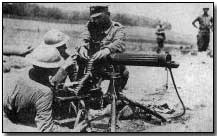
The movement towards mass production started in the years after the American Civil War and continues, even today. Battlegrounds were ideal places to test new machinery and World War I had plenty of new technological advances to exhibit. High explosive shells, grenades, machine guns, pill-boxes (automatic machine gun firing mechanisms placed before enemy lines), bolt-action rifles, hydraulic recoil mechanisms, and zig-zag trenches all were new technology that aided the shape of the Great War (Griffiths, 130). Because of the extreme efficiency and power of these machines, it was incredibly difficult to get past enemy lines. This remade the format of modern warfare. Warfare became defending ones own side, "holding the line" and not about capturing land. I believe this evolved as wars progressed, resulting in the terrorist/martyr guerrilla warfare we see today in Iraq and Afghanistan as technology improved. Furthermore, the war changed the way modern populations view technology. Any increase in technology can now be used for good or bad, and so science was forced to re-evaluate itself in terms of "what is progress?". 

The Popular Vickers Machine Gun 


Modern Day Machine Gun 

Much of the technology used today that was created during that period, has not improved on the basic design. While a lot of warfare technology doesn't really have a positive outlook for humanity (i.e., weapons can only be used to hurt people) there were strides that were also beneficial. In the field of medicine, hygiene became very important on the front and at home. Gunshot wounds started being irrigated with antiseptic fluid  (the Carrel-Dakin treatment) and the first real prostheses were seen for limb loss. Additionally, soldiers were instructed to take good care of their feet, and so changing socks and cleaning feet prevented "trench foot" (Keegan). Many citizens took part in caring for their soldiers abroad, as seen in the Upstairs Downstairs episode with the maids sewing socks to send. Pharmaceutical companies also exploded, with Bayer's aspirin effectively combating the Spanish influenza epidemic of 1918. 


American Red Cross ambulances being loaded with stretchers in front of the 1st Line Hospital, at the foot of Monte Grappa on the Italian front, ca. 19141918.  CORBIS
The American Red Cross in Monte Grappa, Italy
CORBIS Images 


Interestingly, our vocabulary was also affected by Great War terms. Lice were called "chat" by soldiers on the front, and often spread typhus and other diseases. While fires could be used to kill them, these were dangerous and could attract enemy attention. So soldiers would sit and pick lice off of each other, to promote their health. They called this "chatting up" or "chats", and this entered our conversational dialogue. 

Many women, both under the stairs and above it, were forced to take on jobs they weren't used to. In Downton Abbey, Lady Edith of the noble Grantham family finds herself doing farm work because of the lack of young men to drive the tractors. Lady Sybil takes on work as a nurse, and works in hospitals across England. During the Great War, all military nurses were women, and there were 21,480 of them in the US alone. They were also paid and given benefits, which was unheard of. Many members of the older order, such as more mature members of the house in Upstairs Downstairs and the fantastic Dowager Countess of Grantham, disapprove of these goings-on at first but then yield when they see the necessity of war-time.

Not all women were able to find such respectful work. Many war widows became prostitutes for financial reasons, and this led to outbreaks of syphilis in France and Britain. The armies realized the dangers of this disease, and set up regular screenings for it for their soldiers. 

The rise in sentimentality is a difficult thing to measure, but I believe it happened during the Great War. Men going abroad felt the need to carry a memento of their loved one with them, and it was acknowledged that it kept them fighting. This can be seen starkly in Downtown Abbey, where Daisy is forced by the kitchen staff to pretend to love William, only so he can have something to fight for. Poor William succumbs to the effects of poison gas eventually, but loves Daisy all the while and this creates quite complex feelings in Daisy. While not at all the same, in Upstairs Downstairs we see the exchange of lovers' photographs and little good luck charms for the front. This is certainly a more sentimental exchange than most seen in the Victorian Era. 

Downton Abbey Cast of Characters

Social position and the ways people thought about it changed rapidly throughout the Great War. After Lady Sybil threatens to elope with the politically active Irish chaffeur in Downton Abbey, she is adamant that she cannot be stopped. And indeed, she can't. At the end of this week's episode, the Dowager Countess says that the "aristocracy has to adapt to survive, how could we have gotten so far otherwise?". The changing social positions is also seen avidly in the unabashed pursuit of Lord Grantham by a maid, and her bravery in pursuing him in his own bedroom, which is close to his wife's! Of course lords and earls have had dealings with maids before, but to have the maid pursue the lord, without any shame, seems so new for the era. 


References

      "Downton Abbey". PBS Masterpiece Theatre. 2011-2012.   <http://www.pbs.org/wgbh/masterpiece/downtonabbey/>. 

       Griffiths, P. Battle Tactics of the Western Front. New York: Alfred A. Knopf, 1994. p130.

      Helfrich, Ron. "US History Civil War to the Present: A Thematic History". 2012.

Keegan, John. An Illustrated History of the First World War. New York: Alfred A. Knopf, 2001.

     "Upstairs Downstairs". PBS. 1971-1975. 


POST THREE: THE TWENTIES

The 1920s in America were a time of relative excess and happiness. The momentum from the first World War had continued for the American economy, as America (relatively unscathed by the war, unlike Europe) supplied products to Europe for their rebuilding. According to the text, "by 1920....Europe owed the US $10 billion dollars thanks in large part, of course, to the Great War". The United States was becoming a "creditor nation". Furthermore, America was protected from buying foreign products by tariffs. Consumers clamored for products to put in their homes, and the result was a huge growing of the US GDP: "Between 1922 and 1929 gross domestic product (GDP) grew from $72 billion dollars to around $104 billion dollars, a growth of around 40%. Manufacturing output expanded by 64%" (Helfrich). The government's laissez-faire stance (with the exception of tariffs and other restrictions) seemed to be working. 

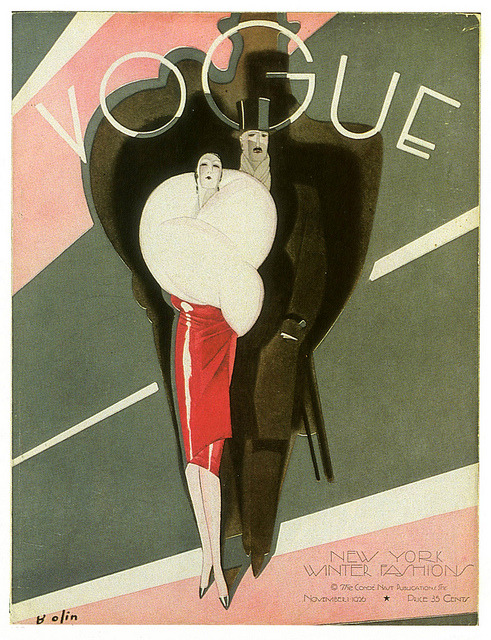
The power of advertisement continued due to all of the propaganda efforts during WWI. Propaganda, as advertisements, began appearing in newspapers and magazines all across America. The establishment of radio centers across the country were used for commercial public broadcasting. Magazine founding became a major activity, largely headed by tycoon Conde Montrose Nast, with the creation and wider distribution of fashion magazines including Vogue

girlflapper:


Casting A Large Shadow by paul.malon on Flickr.
Via Flickr: 1926; cover art credited to Bolin.
1926 Vogue Cover 

American infrastructure began to change due to the prevalence of the automobile. Via the rubber, steel, nickel, plate glass, lead, leather, paint and automotive industries, "the jobs of 3.7 million Americans had a direct or indirect relationship to the auto industry. Americans owned 80% of the world’s motorcars" (Helfrich). This monopoly over the automotive industry would remain prevalent in the American mind for decades to come. Public road construction became vital for the new American public, and the idea of tourism across the country for vacations began to take shape. 

The symbol of free femininity, the flapper, began to embody the 1920s or the "Jazz Age". Flapper girls wore bobbed hair, short skirts, makeup and smoked cigarettes. They embodied a freedom of spirit, a freedom of movement, and freedom from cultural inhibitions. Using sex to climb up social ladders was a new theme, and even portrayed in the movies (Baby Face, directed by Alfred E. Green). As women were given the right to vote in 1909, women's movements became more and more mainstream. Planned Parenthood began to get its footing in 1916, when Margaret Sanger opened a birth control clinic in New York city and started handing out birth control information (Planned Parenthood). 

The Ziegfeld Follies are an oft heard term associated with the Jazz Age. The Ziegfeld Follies were a cross between a vaudeville show and a high-end broadway show, with girls in typical flapper costume running up and down sets. The Ziegfeld Follies started in 1907, in New York City's Broadway, and continued until 1957. Celebrity Ziegfeld Folly girls include Josephine Baker (the 'Creole Goddess'), Gilda Gray (inventor of the "shimmy"), and Sophie Tucker (called 'The Last of the Red Hot Mamas'). 

Ziegfeld Girls

The 1920s were a time for excess, entertainment, and often ignoring the rules of government (Prohibition). It is only fair to state that eventually the good times had to end.


References

Helfrich, Ron. "US History Civil War to the Present: A Thematic History". 2012.


"The Theatre: Sophie Spanked". Time. July 24, 1939. <http://www.time.com/time/magazine/article/0,9171,771691,00.html>. 


Monday, January 23, 2012

BLOG ONE


POST ONE: The Most Hated Family in America 


After watching the documentary, "The Most Hated Family in America" (Theroux, BBC2 2007, <http://topdocumentaryfilms.com/the-most-hated-family-in-america/>, I realized how dependent the Phelps' family views were on being ostracized. Theroux's documentary focuses on the Phelps family of the Westboro Baptist Church, an extremist American Christian group that ardently feels that America is headed down the wrong path. They spread their message by holding rallies proximal to soldiers' funerals, arguing that their death is caused by America turning to the Devil in terms of homosexuality in this country. The Phelps family has a small matriarchal thread running through it, and also has many lawyers which defend their actions in courts of law by citing the freedom of speech.


Culturally, the Phelps family practices modesty socially. They do not interact with the public on more than a basic level. They live in Topeka, Kansas, where industry is not booming and the feel is more rural than urban. They are educated and outspoken with the beliefs. Because of this, many of the family members, especially the children, are ostracized. As the documentary shows the public reaction during a picket, Theroux notices a "100% negative reaction". Due to this ostracizing from the local and global community, the children can be seen to cling tighter to what they know (their family and their family's beliefs). As seen in the documentary, few of the young women interact outside the family socially, and none have friends that are more than "nice acquaintances". Because there is no other social outlet other than family, the Phelps family holds together and spreads their beliefs more effectively as a group.


Shirley Phelps, Phelps Family Matriarch


This documentary focused on the women of the family more than the men. It seemed that the family was made up of mostly women, who shunned today's sexy pop culture and seemed disgusted at the "whorish" attitude of the youth. This rebellion from the mainstream resulted in their gravitation towards modesty and celibacy.  A majority of women in the group, a largely female demographic, could easily promote these qualities because so much of mainstream media and pop culture is demeaning to women. Most rap songs reduce women to sex objects, and with the rise of female singers such as Rihanna and Nicki Minaj, who promote these views with billboard hit songs like "S & M" and "Stupid Hoe", disrespect of women via lyric seems unlikely to end. It made sense that the Phelps women were preaching modesty, to stand against these masochistic, disrespectful trends.


Nicki Minaj's Latest Single 2012


Demographically, the leaders of the pickets seemed to be women. Shirley Phelps herself had many leadership qualities, including confidence, patience, and quick wit. It was surprising to see a woman in the position of Westboro leader, but she did the job, and had her followers in her daughters, family and fellow church members. I expected that such a conservative Christian movement would shun the leadership roles of women. It's clear that the legal power of the Phelps family (with their plethora of well-versed lawyers, including Shirley and her father) is enough to perhaps keep away more physical attacks for fears of a lawsuit.


Topeka, Kansas is an area of little industry. According to the US Bureau of Labor Statistics, Topeka has an unemployment rate of 7.1%, which is higher than the unemployment rate of Kansas (6.5%). Topeka's biggest employer is the State of Kansas, and there are few high-tech companies in the area. Geographically, Topeka is an area where youth can easily fall into alcoholism and drugs, since there isn't that much to do. Wal-Mart is a big attraction of the area, as are bowling alleys and skating rinks. The only 'clubs' in the area are strip clubs, as a Google search of "Topeka Clubs" shows only adult clubs marked on the map. The Phelps family prevents their children from boredom and perhaps, eventually, a downward spiral into not-so-savory activities by keeping them involved with the protests. As seen in the documentary, children help making signs, attend the pickets, are present at every family gathering, and are heavily involved in the church. Geographically, there really isn't much else the kids could be doing, especially as they grow up into adulthood. This keeps alive the youth of the Westboro Baptist Church, and their next generation.


Downtown Topeka, Kansas
City Data


"The Most Hated Family in America" was an interesting documentary. But I believe watching it gives more credit to the Phelps family than is their due. Watching a bunch of crazy people, who have a hard time following logical questions as seen in 'Gramps' Phelps spiral into foul humor after one question by Theroux, gives them more exposure than necessary. Theroux's analysis of the family as "welcoming" at times was too ridiculous to take seriously, because the entire time they told Theroux he was going to hell with smiles on their faces. It is enough to know that the Westboro Baptist Church exists, just as it is enough to know that skinheads and neo-Nazis exist, but to give them air-time and legitimate thought is useless. It is useless because this family is irrational, and trying to follow their intentions without prejudice cannot be done. It is clear in the emotional reactions of Shirley and Gramps to personal questions, that they have either been hurt by a world that could not hear them, spent too much time alone in the woods of Kansas, or broke with sanity at some point in their trying legal careers. Actually wanting to understand the Phelps family's point of view is pointless, because it cannot be understood. It stems from an anger at the "other" (the "fag" or "soldier" or "failure of America" or "sinner" or something else) that cannot be quenched because there is no forgiveness along with it. And so the beliefs of the Phelps family will forever be confusing and illogical, because there is no Christian compassion to accompany their fundamentalism. Trying to understand their beliefs cannot be done. In my opinion, this is a family that should be shunned by the public eye, and shipped to fight America's wars, alongside those they love to look upon with scorn.


Works Cited

Theroux, Louis. "The Most Hated Family in America". 2007: BBC2. <http://topdocumentaryfilms.com/the-most-hated-family-in-america/>. 

"Topeka, Kansas Unemployment". November 2011. US Bureau of Statistics: <http://www.deptofnumbers.com/unemployment/kansas/topeka/>. 


POST TWO: Reconstruction 

Watching Bill Moyer's interview with Douglas Blackmon of The Washington Post, reminded me of Upton Sinclair's The Jungle more than anything else. During the time of rapid city growth (Blackmon used Atlanta, GA as an example, with Sinclair it's Chicago, IL), manual labor was required and often got via immoral methods. Bill Moyer's interview with Douglas Blackmon explored reconstruction, and how long it actually took the United States to shake off the bonds of slavery. Blacks continued to be kept in low, poor positions via racist legislature in the south.

Freedman's Bureau Officer Standing Between blacks and whites in the 
Reconstruction South

Blackmon argued that Slavery By Another Name (the name of his book) took place in the South after the Civil War and up to the 1940s. The "former slave owner and Southern businessman reinvented slavery" legally via harsh legal codes against former slaves (Blackmon). Black life was "criminalized" by the institution of slave codes or black codes (Blackmon). Men could be punished for vagrancy, and since many former slaves worked as farmers and couldn't establish their employ, they were sent to labor farms to work off fees.

This draws many parallels with the life of the European immigrant in Chicago after the Civil War. In Sinclair's novel, immigrants worked grueling jobs in hazardous conditions for low pay. Often they were roped into signing confusing contracts riddled with clauses and unfair legal binding terms if they wanted a decent place to live. The main character, Jurgis, sees his wife turn to a prostitute in order to make ends meet, and attempts to educate the younger children fall flat as they must also work so the family doesn't go broke (as young black children also seemed to have to do to avoid prosecution, according to the Helfrich). It really seemed to me that Blackmon was describing wage slavery, which is not something limited to ex-slaves in American history.


Furthermore, the attitude towards these industries was not one of shame, or regret. Georgian authorities let journalists come and document the harsh, unfair conditions. The bitterness sprung by many ex-Confederates, as they saw their former plantations shrink and turn to wilderness, was passed on eagerly from generation to generation. The passed on racism and xenophobia is the major contrast for wage slavery's social acceptance between Reconstruction and Industrial Revolution. Authorities in Chicago also supported the wage slavery situation as Sinclair showed, writing about how American tour groups would pay to walk around meat factories at the time. America is a capitalist country and business should and will continue, no matter what. Our history has shown this and continues to show this, because that is the basis of this country.

The state constitution formed in Georgia in 1865 was run by Governor James Johnson, who upheld all of the old laws and added prohibition of inter-racial marriage. Johnson had remained in Georgia during the Civil War, and was not going to let go of the "old South" easily. The damage done to the state of Georgia was painfully obvious, with 107,000 voters in existence in the 1860 election, and only 50,000 in 1865 (University of Georgia Press). According to the University of Georgia Press, "voters elected to office many ex-Confederates". Supposed legislature spouted by Union forces terrified many ex-Confederate families, who looked forward to getting their land back after years of war. William T. Sherman's Special Field Order Number 15, issued at Savannah, promised "forty acres and a mule" to every freed black in 1865. While Union forces up north probably thought this an excellent way to re-populate and develop the South, Southerners wondered whose acres the blacks would receive. Such words did not prompt friendliness between whites and blacks.

Devastation of Downtown Atlanta, GA 1865
Image by George Barnard, All Rights Reserved 

Economics at the time also did not promote friendliness to blacks. Cash crops such as corn and cotton were reduced in numbers, and this affected local economies. For example, "cotton plummeted in 1865 to around 50,000 bales from a high in 1860 of more than 700,000 bales". So cotton farmers were probably not making enough to feed themselves or their families. The hard economic times were not helped by the fact that blacks were flocking to towns to escape rural racism. However, there "they encountered overcrowding and a shortage of food" and thus "fell prey to epidemic diseases" (University of Georgia Press). 

The Freedmen's Bureau eventually became more active in 1865, giving blacks access to schools and administering a land program throughout Georgia (University of Georgia Press). Without their old farmhands, however, the ex-Confederates could only watch bitterly as their untilled land went to waste. 

Freedmen's Bureau 1866
Sketch by Jas E. Taylor

Reconstruction saw the expansion of federal government power over the South (Helfrich, 19) as Northern authorities were not agreeing with the way the South was handling freed slaves. I thought the textbook took an overly harsh role against President Andrew Johnson by saying "Johnson appointed governors to the Southern states who were hostile to African Americans" (Helfrich, 13). Anyone Johnson appointed that had been a citizen of any of those states would've been hostile to African Americans at the time. The South sympathy to ex-slaves was not large at all, and certainly the men wealthy enough to be influential and involved in politics would not be happy about having ex-slaves owning and tilling land. Of course the authorities in the South were going to try to uphold slavery--it was a way of economy that they knew and relied upon and the federal government was not one that they were happy to be under after the Civil War.

Reconstruction wasn't about former slaves being re-enslaved, I think. I think this because any time of extreme economic growth puts manual workers in tough conditions, so that cities can be built. Slave labor happens today on the Asian continent, in mines and clothing sweat shops owned by American companies. Slave labor isn't going to go away because it is cheap and effective and big business loves it as long as its customers can't see it. So I think American Reconstruction can be considered something more political instead of economic.

I agree with W. E. B. Du Bois' sentiment about Reconstruction, based on his book Black Reconstruction. Du Bois argues that an overthrow of the Southern aristocrat during Reconstruction couldn't happen due to racial divides between the poor black and the poor white. I think this is true. A Confederate soldier returning from war would have a hard time seeing eye to eye with an ex-slave farmer, and I am sure the voices of hate were spoken to these men's children and their children. Because of this divide that couldn't be overcome, a reversion of the ex-slave to his or her pre-Civil War conditions was imminent. And so I think Reconstruction saw an expansion of government, with the gaining of power by the Freedmen's Bureau in 1866, and the attitude Northerners took towards Southern politicians, so much as reducing their respect in the Congress (Helfrich, 15-19). 

Works Cited

Du Bois, W.E.B. Black Reconstruction in America. New York: Scribner, 1935. 

Helfrich, Ron. "US History Civil War to the Present: A Thematic History". 2012.

"Reconstruction in Georgia". The New Georgia Encyclopedia. University of Georgia Press: September 15, 2008. <http://www.georgiaencyclopedia.org/nge/Article.jsp?id=h-2533>. 

Sinclair, Upton. The Jungle. See Sharp Press, 2003. 

Moyers, Bill and Blackmon, Douglas. "Slavery by Another Name". Bill Moyers Journal. <http://www.pbs.org/moyers/journal/06202008/watch2.html>. PBS, 2008 


POST THREE: The Gilded Age: Albany Businesswomen

Susan Lewis' speech on businesswomen in Albany, NY was very entertaining and informative. With her overview of Albany businesswomen during the Victorian era, I was surprised by a few of her findings and not surprised by others.

Lewis found that most of the businesswomen in Albany were dressmakers, white, foreign-born, widowed and middle-aged. The reports made for them by creditors from R.G. Dunn Credit Registers often used words such as "honest", "industrious" and "shrewd" to describe these businesswomen. Many of the stories seemed to show that women had a better time at business when they had their husbands out of the way, whether they were widows or unmarried.

"The New Womans Barber" 
Little Gallery, Sage College of Albany 
The Times Union 

During this period, from 1830-1885, I believe women began to see more of each other in high powered positions. Queen Victoria, for example, reigning England without her husband Prince Albert, was a prime example of a powerful female. Women seemed to be expressing interest in the ways of the trade and becoming skilled themselves, most frequently in Albany as dressmakers or milliners, as Lewis reports.

The ability for Albany to be a port city on the Hudson River, as well as a central location for railroads, caused a boom in Albany residences and population (Helfrich, 30). This industrial excitement required women to take on more domesticated tasks, as men fulfilled the manual labor required of laying railroad track and constructing buildings.

Albany Steamer, 1900s

One of the female businesswomen types that Lewis defines was the "worthy widow". A woman forced to enter business by the loss of a husband, typically thought of as a person with "good character", and "good reputation". I believe pity for a woman of this type probably had something to do with these thoughts. In parallel, the new character Jane in the PBS melodrama Downton Abbey is also a "worthy widow". This new maid asks for work at the house of the Granthams, and causes quite a stir because she has a child and is married, unlike her unmarried, single compatriots downstairs. The ideology of a hard working widow clearly persisted until World War I, as Downton Abbey shows by the characters' appreciation and welcome of such a woman after life has dealt her a hard turn.

I thought it was interesting that Lewis recorded that 41% of businesses that women controlled were food/drink establishments. Most of the small businesses in Albany today seem to be also of the food/drink variety, and so its popularity among Albanians has remained unhindered. Their popularity is clear by four of the establishments their being recipients of Small Business Excellence Awards given to New York businesses in 2010 (Barnes).

Adirondack Regional Chamber of Commerce 
Supporting Small Businesses 

I was not surprised by the prevalence of non-Victorian businesses ("bawdy houses") being in Albany. Victorians identified prostitution and brothels as "the social evil" and yet they abounded during the era. Albany seems to have quite the history of prostitutes, Troy, NY in particular being called the town of "collars, churches and call-girls" in the 19th and 20th centuries (http://railroad.union.rpi.edu/old_site/index.php). Even some of the buildings (Mason Labs, People's Avenue Complex) on RPI's campus were used as children's homes for prostitute offspring as late as 1946, when they were bought by the institute.

Works Cited 

Barnes, Steve. "Food, drink businesses nab awards". The Times Union Online. <http://blog.timesunion.com/tablehopping/15553/food-drink-businesses-nab-awards/>. 2010.


Helfrich, Ron. "US History Civil War to the Present: A Thematic History". 2012.

Lewis, Susan. "Businesswomen in Albany, NY". <http://www.albany.edu/talkinghistory/arch2003jan-june.html>. 2003. 

"Mame Fay and the Red Light District". Rensselaer Model Railroad Society. <http://railroad.union.rpi.edu/old_site/article.php?article=1466&q=prostitute>. 2009.